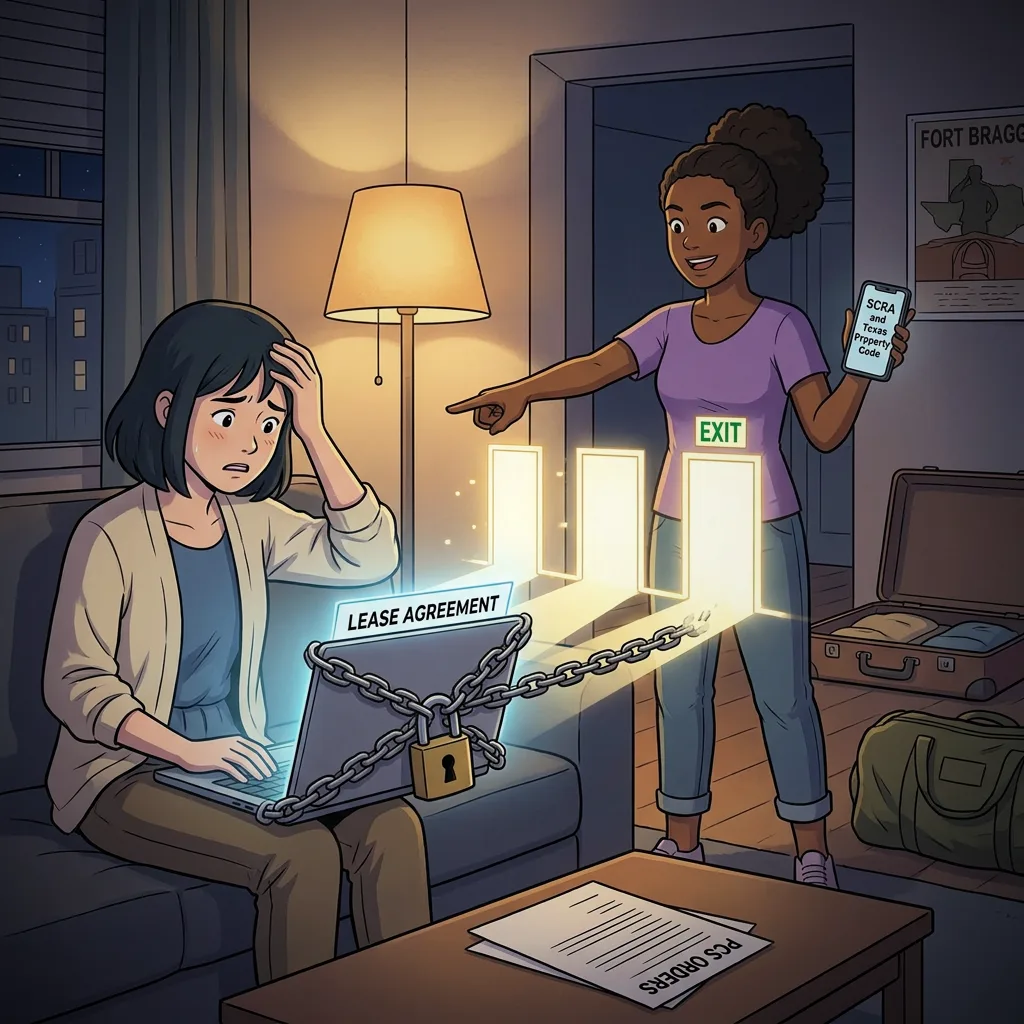
The Maintenance Black Hole — Why Houston Repair Requests Vanish (And the 7-Day Rule That Ends the Standoff)

Houston repair requests vanish into the portal until your apartment is 94°F at midnight. Texas Property Code §92.056 gives your landlord 7 days — here's exactly how to use it.

Landlord repair deadline after written notice for health/safety issues
7 Days
Repair & deduct / Lease termination / Rent withholding with escrow
3 Tenant Remedies
Texas Property Code section protecting renters from landlord non-response
§92.056
"My AC broke Tuesday. I submitted a maintenance request online. Wednesday: nothing. Thursday: I called the office. 'We've submitted a work order.' Friday: no one came. Saturday: office closed. Sunday: I slept in my car with the engine running because my apartment was 94°F at midnight. Monday: 'The technician is scheduled for later this week.' Later this week. In August. In Houston. My apartment is a sauna and my landlord is on a schedule." This is the real voice of a Houston renter in the middle of a broken-AC week. Not a hypothetical. Not a worst-case scenario. **The median experience.** Here's another real story, posted to r/houston in the summer of 2021: > "It's officially been a week since our AC broke down and started blowing out hot ass air instead. I tried to get my landlord to care about the situation at least half as much as I do... I had maybe two hours of sleep in the three days we were stuck there... I have lost food and pets (my tank of pre-covid fish died from the water getting too hot)... From what I have heard from repair men he has over 300 properties and treats them all the same." > > — r/houston renter, summer 2021 Fish died from water temperature. Food lost. Two hours of sleep in three days. 300 properties managed identically badly. This is the **Maintenance Black Hole** — the pattern where a Houston repair request disappears into the resident portal, nothing happens, nobody answers, and the renter waits in the heat until the landlord decides to act. It is the one Houston renter pain that can actually kill you if the timing and temperature align badly enough. It also happens to be one of the only renter pains with a **hard legal remedy most renters have never heard of.** Texas Property Code §92.056 gives your landlord **seven days** — and not a day more — to make a diligent repair effort after you send written notice. Fail to act, and you have four separate legal options, all of them sharper than most renters realize, and all of them protected by a six-month retaliation shield. This blog explains the black hole, why Houston landlords get away with it, and — most importantly — the exact seven-day process that ends the standoff. ---

Top Spots Nearby

  • Hermann Park — Hermann Park, nestled in Houston's Museum District, is a vibrant urban oasis brimming with treasures for visitors of all ages. Home to stunning natural features, including the picturesque McGovern Centennial Gardens and a tranquil reflecting pond, the park's landscape invites leisurely strolls and picnics in its vast green spaces. Outdoor enthusiasts can enjoy an array of recreational activities, from paddle boating on its serene waters to exploring scenic trails perfect for walking, jogging, and biking. The park also features the delightful Lott Family Carousel, which has become a nostalgic favorite among families, alongside the engaging Hermann Park Railroad offering experiences for train enthusiasts of all ages. Throughout the year, Hermann Park serves as a hub for community events, including student performances and environmental initiatives, creating a lively atmosphere that fosters connection and a sense of belonging. With amenities such as the newly added McWilliams Dog Park, the park is truly a space where everyone—from children to canine companions—can find enjoyment and solitude alike.
  • Discovery Green — Discovery Green is a vibrant 12-acre urban park nestled in the heart of Houston's EaDo neighborhood. This lively oasis offers an array of amenities, including an outdoor ice rink, an expansive event lawn, and a picturesque one-acre lake perfect for kayaking. Visitors can enjoy lush green spaces designed for relaxation and recreation, featuring dog runs and playgrounds that cater to families and furry friends alike. The park is alive with activity, hosting a diverse schedule of community events such as outdoor movie nights, cultural celebrations, and seasonal festivities that draw crowds from all over the city. With numerous walking and biking trails that weave through the landscape, Discovery Green invites everyone—from fitness enthusiasts to casual strollers—to explore its beauty. Whether one seeks solitude in nature or a place to gather with friends and family, this park is a welcoming space full of joy, exploration, and discovery.
  • Memorial Park — Memorial Park is an urban oasis nestled in the heart of Houston, offering a spectacular blend of natural beauty and recreational opportunities. Visitors can immerse themselves in diverse landscapes, from tranquil wetlands to vibrant native prairies and lush savannas, all interconnected by a vast network of hiking and biking trails. This expansive park is not just a haven for outdoor enthusiasts; it features state-of-the-art facilities for running, golfing, swimming, and playing tennis, making it a perfect destination for fitness lovers and families alike. The park hosts various community events throughout the year, including the enchanting "Live at Live Oak" concert series that celebrates different cultural festivities under a starry sky, fostering a sense of community and joy among attendees. With its tranquil green spaces and engaging recreational activities, Memorial Park attracts nature lovers, fitness aficionados, and families looking for a fun day out. Whether you're exploring the serene trails or participating in community gatherings, Memorial Park promises a refreshing escape from the urban hustle.
  • The Breakfast Klub — The Breakfast Klub, situated in the vibrant Midtown neighborhood of Houston, TX, is a celebrated destination for breakfast enthusiasts. With a menu that brilliantly fuses Southern comfort and soulful flavors, this establishment is renowned for its dedicated focus on quality, freshness, and authenticity. The culinary masterminds behind the kitchen are deeply inspired by traditional Southern recipes, bringing dishes like the iconic Katfish & Grits and tantalizing Chicken & Waffles to life, each expertly crafted to leave diners yearning for more. The ambience is warm and inviting, marked by cheerful decor and a friendly vibe that encapsulates the spirit of community, making it an ideal spot for families, brunch with friends, or solo visits alike. What sets The Breakfast Klub apart is not only its diverse and mouthwatering offerings but also its commitment to service, attentiveness, and creating memorable dining experiences. Visitors will find a blend of hearty options and healthier fare, ensuring there's something for everyone, all served with a side of homey goodness. For those seeking an unforgettable breakfast experience, The Breakfast Klub is undoubtedly a must-visit gem in Houston's food scene.
  • POST Houston — POST Houston stands as a vibrant culinary destination in the heart of downtown, encapsulating the spirit of modern Texas dining with its eclectic offerings and dynamic atmosphere. Showcasing an array of cuisines, the restaurant prides itself on its innovative approach, blending traditional flavors with contemporary techniques, driven by a talented team of chefs whose backgrounds reflect a rich tapestry of culinary expertise. Signature dishes, such as the savory smoked brisket tacos and the inventive huevos rancheros, highlight the bold flavors that define its menu. The dining space boasts a lively ambiance complimented by artistic decor, allowing both casual diners and food enthusiasts to enjoy a memorable meal amidst the bustling backdrop of downtown Houston. With a focus on locally sourced ingredients, POST Houston distinguishes itself in the culinary scene by offering a farm-to-table experience that resonates with both flavor and sustainability. Whether guests are stopping in for a quick lunch or engaging in a leisurely dinner, the welcoming vibe and attentive service promise an experience that captivates every palate.
  • Ninfa's on Navigation — Nestled in the vibrant EaDo neighborhood of Houston, Ninfa's on Navigation is a culinary landmark that embodies the authentic spirit of Tex-Mex cuisine. Rooted in a rich history, this establishment traces its origins back to Mama Ninfa Laurenzo, who in 1973 transformed traditional Mexican grilling into a Tex-Mex sensation with her pioneering tacos al carbon, laying the groundwork for what would become the beloved fajita. Today, under the expert guidance of Chef Patricia Delgado, the restaurant continues to honor this legacy while infusing modern creativity into the dishes. Diners can indulge in signature offerings like the tantalizing grilled steak fajitas served sizzling with a burst of flavors, or the indulgent chilaquiles, where stretchy cheese melds perfectly with fresh ingredients. The atmosphere at Ninfa's is casual yet infused with historical charm, making it an ideal spot for friends and families looking to share memorable meals. Set apart from others in Houston's dynamic food scene, Ninfa's on Navigation not only excels in culinary artistry but also in fostering a sense of community, making it a must-visit destination for anyone craving genuine Mexican comfort food.

Apartments in This Area

My AC was out for almost two weeks. I had sent my landlord three texts and left two voicemails — nothing. Then I found out about the written notice requirement. I sent a certified letter on a Tuesday. By Wednesday afternoon, they had an HVAC tech at my door. I wish someone had told me sooner. Two weeks of misery and all I needed was the right piece of paper." — **Maya R., Montrose renter, August 2025**
— -

THE BLACK HOLE PATTERN

Every Houston maintenance disaster follows the same arc: **Day 1:** Something breaks. AC, plumbing, pest problem, electrical, appliance. **Day 2:** You submit a maintenance request through the resident portal. You get an automated "ticket received" email. **Day 3:** Nothing happens. You call the leasing office. Someone tells you "a work order has been submitted." **Day 4:** Still nothing. You call back. Same answer, different person. **Day 5:** Leasing office is closed (weekend). **Day 6:** Leasing office still closed. You're now escalating in the group text with your partner about whether to check into a hotel. **Day 7:** Monday. Office opens. "The technician is scheduled for later this week." Later this week, in context, means day 10 or 11 at the earliest. This is not neglect. It is a **system.** The portal is not designed to dispatch technicians urgently. The portal is designed to create a paper trail that makes it look like the complex is handling things while the actual repair capacity is structurally limited by contract vendors, after-hours availability, and the fact that most property managers are optimizing for cost-per-unit, not resident health. The renter experiences this as silence. The management company experiences it as "we're handling it." Both are true. The silence is the handling. ---

WHY MANAGEMENT DOES THIS

It is tempting to assume the black hole is malice. It usually isn't. It is **economics**: **1. The portal theater problem.** Modern property management software creates the appearance of action — automated ticket receipts, status updates, "technician dispatched" notifications — without actually changing how fast repairs happen. The portal is the interface between the renter and a vendor scheduling system that may or may not have capacity this week. The notifications don't reflect reality; they reflect what the software is programmed to show while waiting on reality. **2. The 300-property problem.** Large Houston landlords operate on scale economics. A manager responsible for 300 properties cannot personally track 300 repair tickets. The system is built on the assumption that 80% of tickets are non-urgent (which they aren't in summer), that tenants will tolerate delays (which they shouldn't), and that most repairs can be batched by vendor route (which means your emergency AC repair gets scheduled around someone else's dishwasher replacement in a different building). **3. Vendor bottlenecks.** Most Houston apartment complexes don't have on-site maintenance staff. They contract repairs to HVAC, plumbing, and pest control vendors. Those vendors have route schedules, priority tiers, and capacity limits. In August, every HVAC vendor in Houston is at 110% capacity. Your complex's vendor queue is long because every other complex's vendor queue is also long. **4. The friction moat.** The harder it is to get a repair completed, the more renters give up and either fix it themselves (a sink, a minor leak) or absorb the problem (a cracked tile, a pest). For the management company, friction is a feature that reduces repair costs. It is not framed this way internally, but it is the practical effect. **5. The legal ignorance advantage.** Renters who don't know their rights don't exercise them. Management companies know that 98% of tickets will never become legal claims. The 2% that do are handled quietly with a quick fix and sometimes a rent credit. The 98% pay for the 2%. You are not crazy. You are not being a bad tenant. You are inside a system that makes waiting the default and complaining the exception. ---

HOUSTON SPECIFICALLY: WHY IT'S WORSE HERE

Every city has maintenance issues. Houston's are worse for four specific reasons: **1. Heat.** Houston averages **106 days above 90°F per year.** From late May through September, a broken AC is not a comfort issue — it is a health emergency. People die in Houston summers from indoor heat exposure. Older residents, infants, pets, and anyone with a cardiovascular condition are in actual medical risk when indoor temperatures exceed 90°F for more than a few hours. The r/houston renter whose fish died from water temperature was experiencing an early-warning sign of how hot apartments get when HVAC fails. **2. Humidity.** Houston's summer humidity routinely exceeds 80%. High humidity worsens heat illness, promotes mold growth within 48 hours of water intrusion, and makes non-AC ventilation essentially useless. A broken AC in dry heat is manageable with fans. A broken AC in Houston humidity is not. **3. The February freeze.** On February 13-17, 2021, Winter Storm Uri hit Texas with a multi-day freeze that destroyed the Houston apartment infrastructure in a way nobody expected. Pipes burst across thousands of units. Heating systems failed for days. Power outages left residents without heat in sub-freezing temperatures. Many complexes never fully responded. The Uri event is why every Houston renter over the age of 25 now asks harder questions about winter maintenance protocols — and why the February freeze threat is the second seasonal peak for Houston's maintenance black hole. **4. Caselaw reality.** Texas appellate courts have consistently held that AC failure in Houston summer **is** a habitability issue under Texas Property Code §92.052. It falls under the "materially affecting physical health or safety" standard. This is not a stretched interpretation. It is the settled reading of the statute in Harris County and surrounding jurisdictions. The law is on the renter's side. Most renters don't know it. ---

THE FULL PATTERN: IT'S NOT JUST AC

The Maintenance Black Hole is usually told through AC stories because they're the most dramatic. But the pattern applies to every category of repair: **AC and heating.** Summer AC failures, winter heater failures, post-Uri pipe damage. Highest urgency. Covered by §92.052 habitability standard. **Plumbing.** Leaks under sinks, toilets that don't flush, showers that don't drain, water heaters that fail. Covered by habitability when the failure is significant. A dripping faucet is a ticket; a broken water heater is a §92.056 event. **Pest infestation.** Roaches, rats, bed bugs. Covered by habitability when the infestation is severe enough to affect health. Texas courts have upheld §92.056 remedies for rat infestations and bed bug outbreaks. **Structural.** Water damage from roof leaks, rotting drywall, mold growth, unsafe stairs or balconies, broken windows, locks that don't work. Covered by §92.052 if the defect affects habitability or safety. **Electrical.** Dead outlets (annoying), flickering lights (concerning), burning smell from switches (emergency). Electrical safety defects fall under §92.052. **Appliances.** Refrigerator, dishwasher, oven. These are covered if they were part of the lease — and they always are in Houston apartments — and if the failure significantly affects habitability. A broken refrigerator in August is a §92.056 event because food spoilage is a health issue. The black hole pattern — request ignored, portal silent, management unresponsive — applies to all of them. And the 7-day rule applies to all of them. ---
Here is the statute structure that governs Houston apartment repairs: **Texas Property Code §92.052 — The Duty to Repair.** A Texas landlord is obligated to make a diligent effort to repair or remedy any condition that "materially affects the physical health or safety of an ordinary tenant." This is the habitability baseline. It applies to AC in Houston summer. It applies to heating in Houston winter. It applies to water leaks, pest infestations, and significant structural defects. **Texas Property Code §92.056 — The 7-Day Rule.** This is the single most important statute a Houston renter can know. After the tenant gives **written notice** of a condition that §92.052 covers, and assuming the tenant is current on rent, the landlord has a **presumed reasonable time of seven days** to make a diligent repair effort. If the landlord fails to act diligently within seven days, the tenant has four separate legal remedies — explained below. **§92.0561 — Repair and Deduct.** If the landlord fails to repair within the 7-day window, the tenant may hire a licensed vendor to make the repair, pay for it, and deduct the cost from the next rent payment. The deduction is capped at **the greater of $500 or one month's rent.** Specific procedures apply (including sending the landlord a second notice stating the intent to use the repair-and-deduct remedy), and the tenant must use a licensed, reputable vendor. If done properly, this is the most direct remedy. **§92.0563 — Justice Court Repair Order.** The tenant may file a petition in justice court (small claims / JP court) asking a judge to order the landlord to make the repair. Justice court can order repairs up to **$10,000** in cost. **No attorney is required** — this is specifically designed for self-represented tenants. Houston has multiple JP courts, filing fees are nominal, and the procedure is explicitly renter-friendly. **§92.056(f) — Lease Termination.** If the 7-day window passes without a diligent repair effort, the tenant may terminate the lease without penalty. Move-out is a legitimate remedy when the landlord has failed to perform. The tenant gets their security deposit back (subject to §92.104 normal wear-and-tear rules) and is not liable for the remaining lease term. **§92.056 — The Shorter 3-Day Window for Water and Sewage.** The seven-day presumption is the general rule, but for conditions involving a backup or overflow of raw sewage or a flood from broken pipes or natural drainage, the presumed reasonable time can be as short as **three days**. Houston water-intrusion and sewage failures move on the faster clock. The diligent-effort standard is identical; only the presumed timeline tightens. **§92.331-335 — The Retaliation Shield.** Here is the remedy that makes all of the above safe to use: **for six months after a good-faith repair complaint**, the landlord is prohibited from evicting, raising rent, reducing services, or taking any other adverse action against the tenant. Protected activity specifically includes written repair requests made under §92.052. The shield is automatic — you don't have to invoke it. It kicks in the moment you put the complaint in writing. Together, these statutes create a framework that is **far more renter-favorable than Texas's general reputation suggests.** The problem is that 90% of Texas renters have never heard of any of them. ---

THE 7-DAY RULE PRECONDITIONS (READ THIS SECTION CAREFULLY)

Before you start counting days, the 7-day rule has four preconditions. If any of these are missing, the statute does not apply and your remedies evaporate. **This is the one part of this blog where exactness matters more than voice.** **1. You are current on rent.** §92.056 applies only to tenants who are not behind on rent. If you are withholding rent, you lose the remedy. If you are paying late, you are at risk. The cleanest posture is rent paid on time, every month, in full, until the remedy is either resolved or invoked. **2. You gave WRITTEN notice.** This is the biggest trap. Most renters submit tickets through the resident portal and assume that counts. **It usually doesn't.** Texas case law has consistently required written notice delivered in a way that creates an evidentiary record: certified mail with return receipt, hand delivery with a signed acknowledgment, or (sometimes) email sent to the property manager's official address with proof of receipt. Portal submissions are ambiguous — some courts accept them, others don't. The bulletproof path is certified mail, return receipt requested. **3. The condition affects health or safety OR is required to be repaired by the lease.** Most Houston lease agreements obligate the landlord to maintain basic systems (HVAC, plumbing, electrical, appliances). Even if a condition doesn't clearly hit the §92.052 habitability standard, the lease itself may trigger repair obligations. Read your lease. If the lease says the landlord maintains the AC, then AC failure is a lease breach even before it becomes a health issue. **4. The tenant did not cause the damage through negligence.** If you broke it, you pay for it. §92.056 covers normal wear and tear and ordinary system failures. It does not protect tenants who damaged their own unit and then demanded repair. **If all four preconditions are met, the 7-day clock starts on the day the written notice is received by the landlord.** One more note: the statute says "presumed reasonable time of 7 days." Courts can find that a reasonable time was longer or shorter depending on the circumstances. In Houston summer, "reasonable time" for AC repair is often treated as shorter than 7 days by JP courts because of the health risk. In practice, 7 days is the benchmark but the real test is "diligent effort" — is the landlord actively working on it, or are they stalling? ---

THE 7-DAY RULE STEP-BY-STEP

Here is the exact process to execute §92.056 properly: **Step 1: Document the problem.** Photos of the broken AC thermostat, videos of the hot air blowing, a room thermometer showing indoor temperature, pest sightings with timestamps, standing water, mold patches. Document everything, with dates. Keep these files on your phone and in cloud backup. **Step 2: Submit through the normal channel first.** Yes, use the resident portal. Yes, call the leasing office. Create the paper trail that shows you attempted the standard process. Take screenshots of portal submissions and logs of phone calls. **Step 3: Wait 24-48 hours.** This is your grace period. Most issues that are going to be fixed quickly get fixed in this window. If they don't, escalate. **Step 4: Send written notice.** Type a letter that includes: - Your full name and unit number - The date of the original request - A clear description of the problem ("AC unit is blowing hot air; indoor temperature has been above 88°F for 48 hours; this condition materially affects our physical health and safety") - An explicit reference to Texas Property Code §92.052 and §92.056 - A specific request for repair within 7 days - A statement that you reserve all legal remedies under §92.056 if repair is not made - Your signature and date Send this letter by **certified mail, return receipt requested, to the landlord's legal address as listed in your lease.** Keep a copy. Also deliver a copy in person to the leasing office if possible, get a signature acknowledging receipt, and save that. **Step 5: Save your evidence.** The certified mail receipt, the return receipt card when it comes back, the letter, photos, thermometer readings, portal screenshots, call logs. Everything. In one folder. On your phone and in cloud storage. **Step 6: Wait 7 days.** From the date the landlord received the written notice (the certified mail return receipt will show the date). If during this window the landlord makes a diligent effort — schedules a technician, sends a repair tech, provides a temporary solution — the statute is satisfied. "Diligent effort" does not mean the repair is completed; it means they're actively working on it in good faith. **Step 7: If the 7 days pass without diligent effort, choose your remedy.** Repair-and-deduct, termination, or justice court. You now have four legal options, all protected by the retaliation shield. ---
--- ### 📝 CALLOUT: Written Notice Template **Copy this. Send it certified mail.** --- *[Your Name]* *[Your Address, Unit #]* *[City, State, ZIP]* *[Date]* *[Landlord Name / Property Management Company]* *[Their Address]* **Re: Notice of Required Repair — [Your Unit Address]** Dear [Landlord Name], I am writing to formally notify you of a condition at my rental unit that materially affects my health and safety, as defined under Texas Property Code §92.056. **Condition:** [Describe the issue — e.g., "The central air conditioning unit has been non-functional since [date]. Indoor temperatures have reached [XX°F]."] **Date first reported:** [Date of first report] Under Texas Property Code §92.056, I am requesting that you make a diligent effort to repair this condition within **7 days** of receipt of this notice. If this condition is not remedied within the required timeframe, I intend to pursue all available legal remedies, including but not limited to repair-and-deduct, lease termination, or rent withholding pursuant to applicable Texas law. Please confirm receipt of this notice and provide a repair timeline. Sincerely, [Your Name] [Your Phone Number] [Your Email] --- *Send via USPS Certified Mail with Return Receipt. Keep your receipt and tracking number.* --- ### ⚠️ CALLOUT: What Counts as a Health & Safety Issue in Texas? Texas courts and the Property Code recognize the following as conditions materially affecting health or safety: - 🌡️ **Non-functioning AC** during extreme heat (Houston summer = always qualifies) - 💧 **Water leaks** causing mold or structural damage - 🚿 **Sewage backups** or non-functional toilets - ⚡ **Electrical hazards** — exposed wiring, broken breakers - 🔒 **Broken exterior locks** or doors that don't close properly - 🐀 **Rodent or pest infestations** reaching health-hazard levels - 🔥 **Non-functioning heating** during cold weather - 💨 **Gas leaks or CO2 exposure** risks *Cosmetic issues — chipped paint, squeaky floors, worn carpet — generally do NOT qualify. But when in doubt, document and send notice anyway.* ---
### Texting Your Landlord vs. Sending Formal Written Notice | Factor | Text Message | Formal Written Notice (Certified Mail) | |--------|-------------|----------------------------------------| | **Legal validity** | Generally not accepted as legal notice | Legally valid; triggers §92.056 clock | | **Delivery proof** | Read receipts (unreliable, can be faked) | USPS tracking + signed return receipt | | **Landlord response rate** | Low — easy to ignore | Significantly higher — signals legal intent | | **Triggers 7-day deadline** | No | Yes | | **Admissible in court** | Possibly, but weak | Yes — strong evidence | | **Enables rent remedies** | No | Yes (repair & deduct, termination, escrow) | | **Signals seriousness** | Low | High — landlords know you know your rights | | **Typical repair timeline after sending** | Days to weeks (if ever) | Often within 24–72 hours | | **Protects against retaliation claims** | Weakly | Strongly | | **Cost** | Free | ~$8–12 at USPS | **Verdict:** Eight dollars at the post office could save you months of misery. Send the letter. ---

YOUR FOUR LEGAL REMEDIES

**Remedy 1: Repair and Deduct (§92.0561).** Hire a licensed vendor. Pay for the repair. Deduct the cost from your next rent check, up to $500 or one month's rent, whichever is greater. Send the landlord a second written notice explicitly invoking the repair-and-deduct remedy, attach the receipt, attach a copy of the vendor's invoice. This is the fastest direct remedy — you solve your own problem and make the landlord pay. **Remedy 2: Lease Termination (§92.056(f)).** Walk away. Give written notice of termination. Return the keys. You are not liable for the remaining lease term and your security deposit must be returned (subject to standard deductions). This remedy is right when the unit is no longer habitable and repair isn't happening. **Remedy 3: Justice Court Repair Order (§92.0563).** File a petition in your local JP court. Pay the filing fee ($50-$100). Serve the landlord. Appear at the hearing with your evidence. A judge can order the repair within a specific timeline, award damages, and in some cases rent reductions. **No attorney required.** Houston JP courts have information on their websites about filing for repair orders. **Remedy 4: Sue for Damages.** Sue the landlord for actual damages (medical bills from heat exposure, spoiled food, lost property, hotel costs) plus statutory damages. This requires more time and typically benefits from legal representation, but the payoff can be significant. The 6-month retaliation shield protects you throughout. A note on rent withholding with escrow: some renters ask about simply not paying rent until the repair is made. Do not withhold rent informally — it forfeits the §92.056 remedy entirely. Texas allows a narrow judicial rent-reduction path, but it runs through the justice-court process below, not a self-help bank account. The four remedies here are the clean ones. Most Houston renters use **Remedy 3 (justice court)** when they need repairs done urgently, or **Remedy 1 (repair-and-deduct)** when they can front the cost. Remedy 2 is the walk-away. Remedy 4 is the serious case. You don't have to pick one in advance. You have all four available. The 7-day rule just gives you the trigger. ---

THE RETALIATION SHIELD (§92.331-335)

Every renter who reads the statutes for the first time has the same fear: "If I complain, the landlord will evict me or refuse to renew my lease." This is exactly what §92.331-335 prevents. The retaliation shield makes it **illegal** for a Texas landlord to evict you, raise your rent, reduce your services, or take any other adverse action against you for **six months** after you made a good-faith complaint about a repair issue. The protection applies the moment you put the complaint in writing. If your landlord tries to evict you within that six-month window in retaliation for a repair complaint, the eviction is presumptively unlawful. You can use the retaliation as a defense in eviction court. You can sue the landlord for statutory damages (one month's rent plus $500, plus attorney's fees) if you prove retaliation. **This is why written notice matters so much.** The written notice is also the evidence that triggers the retaliation shield. The moment you send the certified mail letter, you are protected. The moment you only call or submit a portal ticket, the protection is ambiguous. You don't have to be afraid of your landlord. Texas law has already made the decision to protect you. You just have to know the rule exists. ---

THE 2021 FREEZE LESSONS (WINTER STORM URI)

On February 13-17, 2021, Houston was hit by Winter Storm Uri — the worst winter weather event in Texas in living memory. Temperatures dropped to 13°F. Power failed across the state. In Houston apartments, the damage was catastrophic: pipes burst in thousands of units, heating systems failed for days, power was out for 72+ hours in many buildings, and some residents died from exposure. The response from property management companies was variable. Some complexes had disaster protocols in place and moved residents to emergency shelters. Some complexes had staff who came in and cleared pipes by hand. Some complexes — the ones that become Maintenance Black Hole case studies — simply went silent. Residents found no one answering, no emergency line, no on-site staff, and no updates. Some units were without heat or water for more than a week after the storm. The Uri event taught Houston renters two things: 1. **Ask about disaster protocols before you sign.** How does the complex handle severe weather events? Is there an on-site staff presence, or is everything contracted out? What is the plan if power fails for 48+ hours? 2. **The maintenance response pattern in normal times predicts the maintenance response pattern in disasters.** A complex that ignores summer AC tickets will ignore winter freeze damage. Management culture is consistent. Normal-weather response time is your best leading indicator for how the complex will handle an emergency. Every January, Houston's February freeze risk comes back on the radar. The 7-day rule applies to heating failure the same way it applies to AC failure. If your heat fails during a winter storm and your landlord doesn't respond, §92.056 gives you the same remedy framework. ---

WHAT HTXAPT DOES DIFFERENTLY

The Maintenance Black Hole exists because **management responsiveness is the single hardest thing to verify from the outside**. You can check the rent price, you can tour the unit, you can read the lease — but you cannot know how the complex handles a broken AC in August until you are living there in August and your AC is broken. We track it. Every Houston property we work with goes through a management responsiveness audit that includes: - **Historical repair response patterns** — how long does the complex typically take to respond to urgent maintenance requests? - **On-site vs contracted staff** — do they have in-house maintenance or are they at the mercy of vendor schedules? - **Emergency protocols** — is there a working after-hours emergency line? Who answers it? - **Uri response** — how did the complex handle Winter Storm Uri? This is a durable memory check on disaster preparedness. - **Resident review patterns** — do multiple Google/Apartment Ratings/r/houston posts describe the black hole pattern, or is the complex consistently responsive? Every HTXapt shortlist includes a management responsiveness rating for each building. Before you sign, you know what you're getting. After you sign, if something does break, you have a complex that actually fixes it. The black hole is avoidable. You just have to verify before you commit. ---

STOP WAITING. START THE CLOCK.

The Maintenance Black Hole is not a management failing you have to endure. It is a pattern Texas law specifically prohibits, protected by a retaliation shield most renters have never heard of, with four concrete remedies that work when executed correctly. The 7-day rule is the single most useful statute a Houston renter can know. Write the letter. Send the certified mail. Start the clock. If your complex refuses to fix your AC in August, you have options. If your complex is the kind of place that ignores tickets entirely, you have the right to leave without penalty. If you need the repair done and don't have the money to front, you can file in justice court with no attorney. If any of these moves triggers retaliation, that's a separate lawsuit you will win. **Before you sign your next lease:** Send us a DM with the complex name. We will tell you: 1. **Their maintenance response rating** (based on resident reviews, historical patterns, and direct audit) 2. **Whether they have on-site staff or contracted vendors** (and what that means for your response times) 3. **Their Uri response record** (for winter-freeze due diligence) 4. **The red flags in their online review history** specific to maintenance failures You choose what you live in, not what the leasing office lets you believe. **[Start here → htxapt.com/maintenance-check]** ---
### 5 Resources Every Houston Renter Should Bookmark --- **1. Texas Tenant Advisor** 📍 texastenantadvisor.com Free, interactive tool that walks you through your rights based on your specific situation. Generates customized letters and guides. Built for Texas renters, not lawyers. --- **2. Harris County Dispute Resolution Center** 📍 hcdrc.org | 713-755-8274 Free mediation services for landlord-tenant disputes. Often faster than court. Great first step before filing formal legal action. --- **3. Texas Legal Services Center** 📍 tlsc.org | 1-888-988-9996 Free civil legal aid for income-qualifying Texans. Handles eviction defense, habitability cases, and more. Has a dedicated tenant rights hotline. --- **4. City of Houston Health Department** 📍 houstontx.gov/health | 832-393-5080 Can conduct inspections of rental properties with documented habitability violations. A health department violation notice sent to your landlord often accelerates repairs faster than any letter. --- **5. HTXapt.com** 📍 htxapt.com Houston's apartment search platform built for real renters. Filter by verified amenities, maintenance reputation, and building age. Find landlords who actually show up. ---

SOURCES AND CITATIONS

- P31 T3703 — Maintenance Black Hole pain angle (full research frame, Jake voice, r/houston story, HTXapt positioning) - P31 T3703 subtask 4841 — Angle + Psychology + Jake Voice (Houston summer) - P31 T3703 subtask 4842 — Evidence + Houston Heat + Texas Repair Law + Seasonal Pattern - P31 T3703 subtask 4843 — HTXapt Solution + Hooks + Content Strategy - P25 T4001 — Maintenance Black Hole brief (source plan) - P31 T2839 — Texas Renter Rights Quick Reference (statute citations) - P31 Pain Point #1216 — Maintenance Black Hole baseline (28% Fannie Mae, AC/pest/structural) - P31 Pain Point #2815 — Summer AC Neglect (r/houston dead-fish story, Houston heat data) - P25 T3980 / P28 T3982 — True Cost of a Houston Apartment (sibling Jake pillar, pre-sign financial pain) - P25 T3981 / P28 T3998 — 3 Legal Holes (sibling Jake pillar, pre-sign info asymmetry) - P25 T3999 / P28 T4000 — Time Vampire (sibling Jake pain companion, search-phase exhaustion) - **Texas Property Code §92.052** — Landlord's duty to repair conditions materially affecting health and safety - **Texas Property Code §92.056** — 7-day presumed reasonable time, written notice requirement, diligent effort standard, tenant remedies - **Texas Property Code §92.0561** — Repair-and-deduct remedy limits ($500 or one month's rent, whichever is greater) - **Texas Property Code §92.0563** — Justice court repair order authority (up to $10,000, no attorney required) - **Texas Property Code §92.331-335** — Retaliation prohibition (6-month shield after repair complaint) - **Texas Property Code §92.104** — Normal wear and tear standards (for deposit returns after §92.056 termination) - Fannie Mae National Housing Survey — 28% maintenance pain point - r/houston (summer 2021) — viral AC failure story with 300-property operator reference - statutes.capitol.texas.gov — Texas Property Code verification source - Texas Tenant Advisor — tenant.net/texas — additional renter resources *This blog post synthesizes P25 brief T4001 and P31 angle T3703. It is the 4th piece in the 2026-04-15 Jake Pain & Friction content arc, completing pre-sign (True Cost), info-asymmetry (3 Legal Holes), search-phase (Time Vampire), and post-sign tenancy (Maintenance Black Hole) pain coverage. Educational content only — not legal advice. For your specific situation, consult a Texas tenant attorney.*

Maintenance Response Patterns by Inner-Loop Neighborhood

Midtown — On-Site Teams, Same-Day Response

Midtown — Most Midtown high-rises have full-time maintenance staffs on-site. Same-day response on plumbing, HVAC, electrical is the norm. The Texas Property Code §92.056 7-day rule is rarely triggered here — when it is, it usually means a deeper issue requiring an outside contractor.

Montrose — Owner-Dependent Response Times

Montrose — Maintenance in Montrose's smaller buildings depends entirely on the individual owner. Some respond within hours; others go silent for days. The 7-day notice provision becomes practical leverage here. Always send maintenance requests in writing with date stamps.

The Heights — New-Build Punch List Issues

Houston Neighborhoods

Frequently Asked Questions

1: What exactly counts as "written notice" under Texas law?

written notice is a physical document delivered to your landlord that describes the repair needed, the date, and your unit address. The safest method is USPS Certified Mail with Return Receipt Requested — you get proof of delivery. Hand-delivery with a signed receipt from the landlord also works. An email *may* count if your lease specifies email as an acceptable communication method. Text messages are generally the weakest form and may not hold up in court. When in doubt, send certified mail AND follow up by email for a paper trail.

YOUR ACTION PLAN

  • Call the emergency maintenance line if your complex has one. Leave a voicemail and note the time of the call.
  • Submit a ticket through the resident portal. Screenshot the confirmation.
  • Take photos of the thermostat, the indoor temperature (use a thermometer if you have one), and the non-functioning AC unit.
  • If the indoor temperature exceeds 90°F and you have pets, infants, or anyone with a medical condition, go to a hotel or a friend's place. **Save the hotel receipt.**
  • Call the leasing office. Get a specific timeline.
  • If the timeline is "later this week," start the 7-day clock.
  • Write the §92.056 written notice letter (template above).
  • Send it by certified mail, return receipt requested, to the landlord's legal address in your lease.
  • Hand-deliver a copy to the leasing office, get a signature.
  • Document daily indoor temperature readings.
  • Save hotel receipts if you're staying elsewhere.
  • Keep a log of phone calls, portal submissions, and any communication with management.
  • If management does not make a diligent repair effort by day 7, execute one of the four remedies.
  • --
  • "What is your average emergency maintenance response time?" — A leasing agent who can't answer this in minutes/hours is telling you the complex doesn't track it. A complex that doesn't track it has no accountability.
  • "Do you have on-site maintenance staff, or do you contract repairs out?" — On-site staff = faster response in most cases. Contract vendors = subject to vendor capacity, which is always maxed in Houston summer.
  • "How do residents submit emergency requests after hours?" — If the answer is "the portal" with no emergency phone line, the complex is not set up for urgent situations.
  • "What is your escalation path if a repair takes longer than 48 hours?" — A real complex has one. A black hole complex doesn't.
  • "How did residents experience the 2021 freeze?" — This is a credibility test. If the agent can tell you a specific story about how the complex handled Uri, the complex probably has institutional memory. If they dodge or don't know, they don't.
  • --
  • --

Find your Houston apartment

Chat with our AI to find apartments matched to your lifestyle, budget, and neighborhood preferences.

Houston Apartments, Texas Tenant Rights, Renter Tips, Property Code 92.056, Apartment Maintenance

**Slow repairs are often baked in before you sign.** Spot the warning signs early in 3 things Houston apartment listings hide.
**Next in your apartment search:** see The Time Vampire — Why Houston Apartment Hunting Eats 40 Hours of Your Life (And What to Do About It).

More neighborhood guides · Browse Houston apartments · Get matched with a free locator